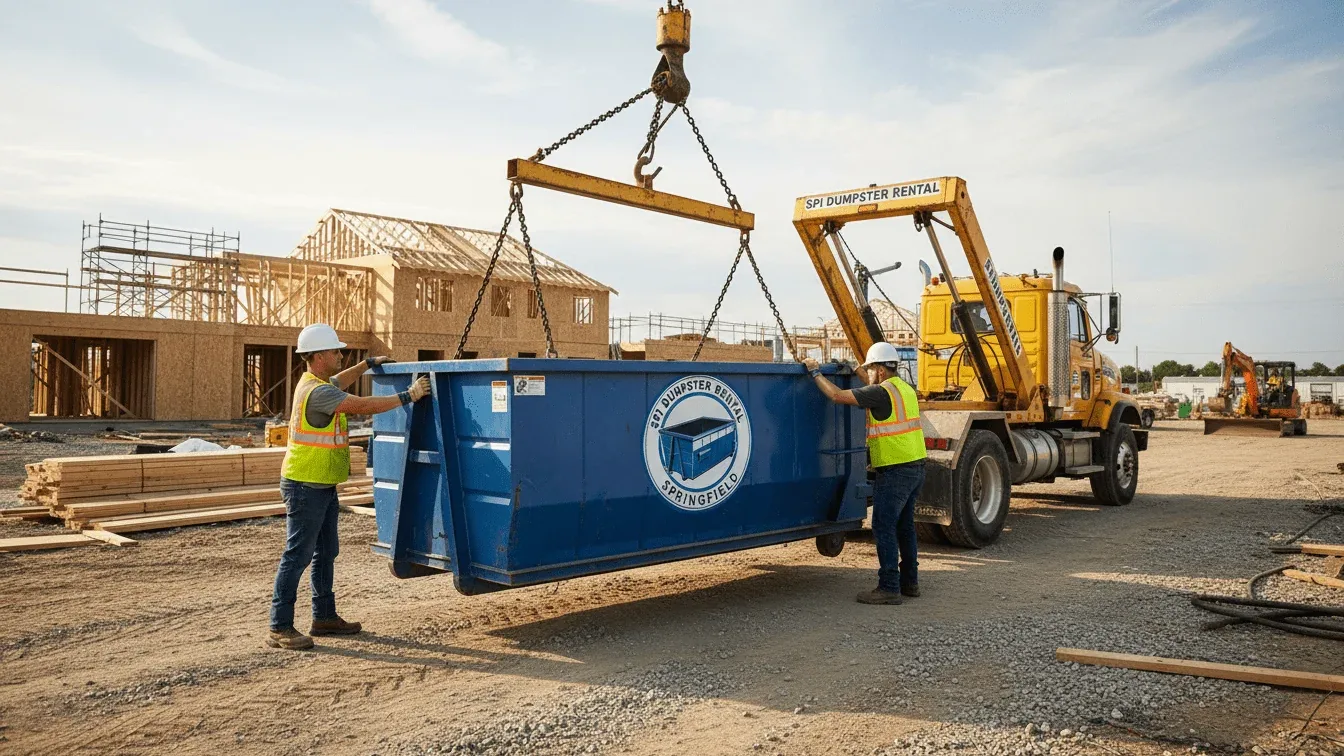
Renting a roll-off dumpster is one of the simplest ways to clear out a house, finish a remodel, or haul away yard debris in Springfield and the surrounding Sangamon County towns. Most of what fills a dumpster is ordinary stuff: old furniture, drywall scraps, broken cabinets, shingles, brush. But a short list of materials is restricted or banned outright, either by state and federal hazardous-waste rules or by the landfill and transfer station that ultimately takes the load. Loading a banned item can hold up your pickup, trigger extra fees, or in some cases create a real safety hazard for the driver.
This guide covers the standard rules that apply to roll-off dumpsters across Illinois. Specific policies can shift slightly from one disposal facility to the next, so when you're not sure about a particular item, the fastest answer is a phone call to (217) 993-8727 before you start loading.
What You Can Put in a Dumpster
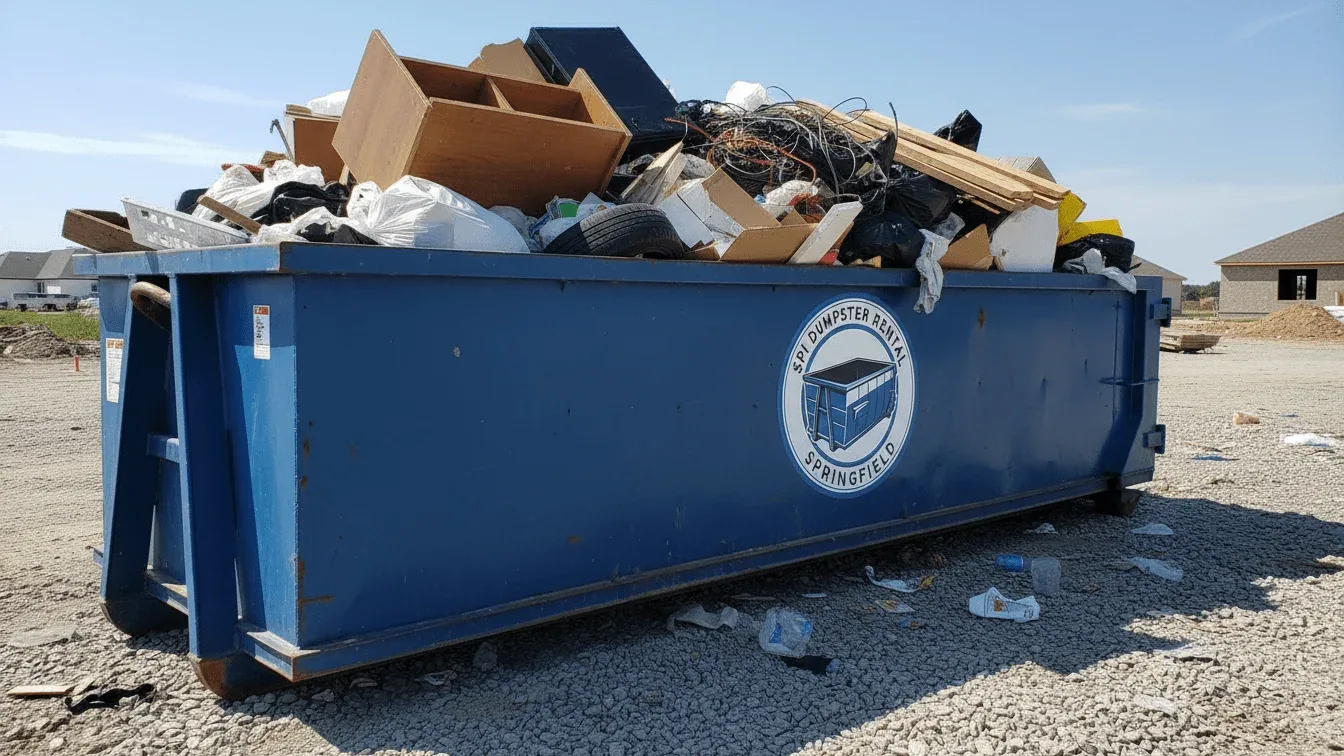
A standard roll-off handles the bulk of what homeowners and contractors need to get rid of. Here's what's generally fine:
- Household junk and clutter — old furniture, mattresses, boxes, toys, clothing, general clean-outs.
- Construction and demolition debris — lumber, drywall, flooring, cabinetry, trim, siding, and similar materials from a remodel or teardown. See our demolition debris removal page for project-specific guidance.
- Roofing materials — asphalt shingles and roofing debris are a common load; ask about a container sized for the job on our roofing dumpster rental page, since shingles are heavy and can push you toward a weight limit fast.
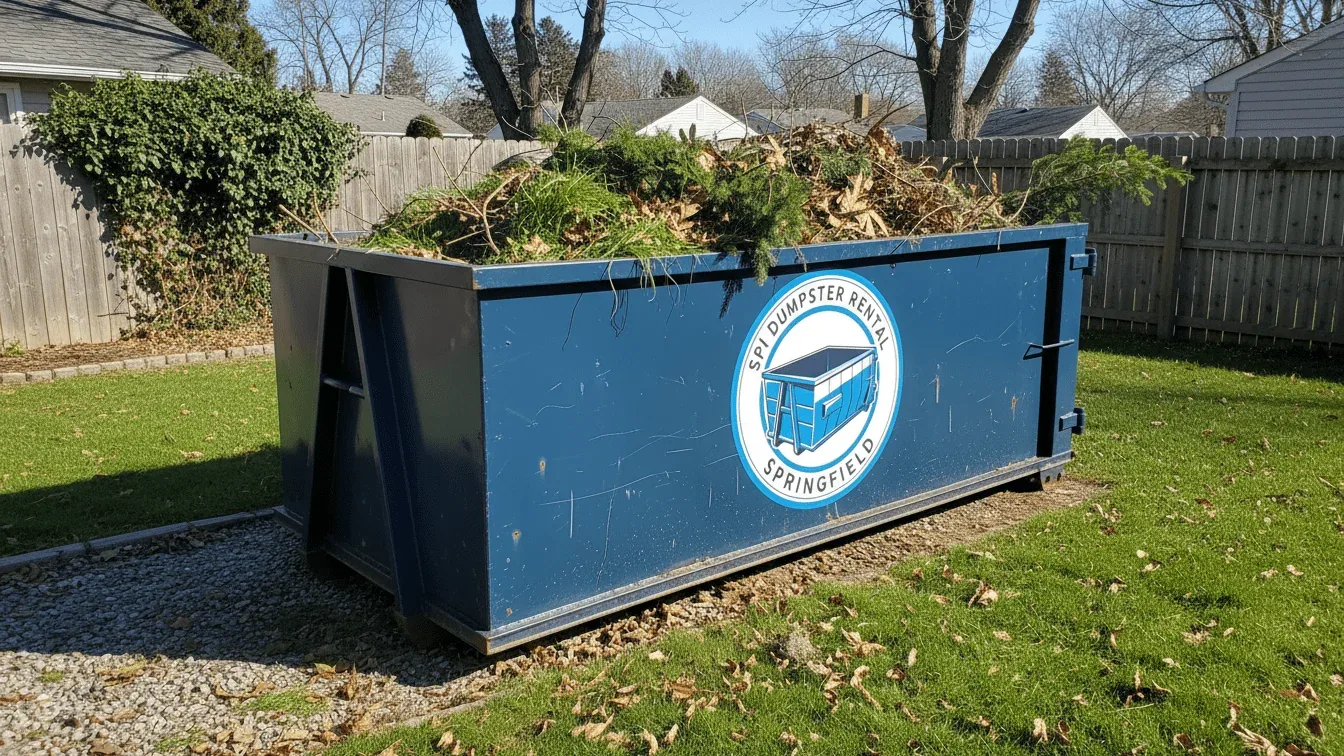
- Yard waste — branches, brush, sod, and landscaping debris are fine in a container rated for yard waste. Check our yard waste removal service if that's the bulk of your project, since some facilities process green waste separately from mixed debris.
- Clean concrete, brick, and dirt — heavy materials like concrete, asphalt, brick, and clean fill dirt are usually acceptable, but they need a container rated for concrete and heavy debris and are priced by weight rather than volume. A standard mixed-debris dumpster can be overloaded fast by concrete alone.
- Non-hazardous scrap metal — pipe, fencing, siding, appliances (frames), and similar metal is typically fine.
- Appliances without refrigerant — items like stoves, washers, and dryers are usually accepted without issue. Appliances that hold refrigerant, such as refrigerators, freezers, and window or central AC units, often need to have the Freon professionally recovered before they can go in a standard container. Rules on this vary by facility, so it's worth confirming with us before the unit goes in the dumpster.
If your project is mostly whole-house clutter rather than construction debris, our residential dumpster rental and junk removal services are built for exactly that, and commercial dumpster rental covers ongoing business and job-site needs.
What Cannot Go in a Dumpster
A handful of materials are prohibited from roll-off dumpsters industry-wide, either because they're regulated hazardous waste or because they pose a fire, chemical, or contamination risk at the landfill. These apply no matter which company you rent from:
- Hazardous waste of any kind — anything classified as hazardous under state and federal rules cannot go in a roll-off.
- Paints, solvents, and chemicals — liquid paint, thinners, solvents, pesticides, and similar chemical products need to go through household hazardous waste disposal, not a dumpster.
- Tires — most landfills and transfer stations reject tires outright and require them to be recycled separately.
- Batteries — car batteries, and lithium-ion batteries in particular, are a serious fire risk in a mixed load and need to be recycled through a battery collection point.
- Asbestos-containing material — materials like old floor tile, pipe insulation, or textured ceiling coating that contain asbestos require special handling by an asbestos-licensed contractor and cannot go in a standard dumpster. If you suspect a material in your project might contain asbestos, have it tested and handled by a licensed abatement professional before demolition begins — this isn't something a roll-off rental can take on.
- Medical and biohazard waste — needles, medical sharps, and biohazardous material require dedicated medical waste disposal.
- Propane tanks — pressurized tanks of any size are an explosion risk and are never allowed.
- Fuel and oil — gasoline, motor oil, and other petroleum products need to go to a household hazardous waste or oil recycling collection point.
- Ammunition — live ammunition cannot be disposed of in a dumpster under any circumstances.
- Electronics, in many cases — TVs, monitors, and computer equipment fall under separate e-waste recycling rules in a lot of jurisdictions. Check with us before loading a large volume of electronics, since acceptance varies by disposal facility.
- Railroad ties — creosote-treated wood like old railroad ties is often restricted or banned at the landfill because of the chemical treatment, even though it looks like ordinary lumber.
Construction Debris and Illinois EPA Rules
If your project generates a large volume of construction and demolition debris, it's worth knowing that Illinois regulates where that material can legally go. The Illinois EPA maintains detailed guidance on Clean Construction or Demolition Debris (CCDD) and General Construction/Demolition Debris (GCDD), which explain how uncontaminated debris is classified and where it can be used as fill versus where it has to be landfilled. For a broader look at state waste and disposal rules, the Illinois EPA Land Pollution and Waste Disposal hub is a solid reference, especially for contractors managing larger demolition jobs across Sangamon County.
Loading Tips: Don't Overfill, and Call Before You Dig
Beyond what's allowed inside the container, how you load it matters too. Fill the dumpster level with the top rail rather than heaping material above it — an overloaded container isn't safe to transport, and a driver needs a clear sight line over the load when it's picked up. Distribute weight evenly, and keep heavier material like concrete or shingles low and spread out rather than piled in one corner.
If your project involves any digging — setting a fence post, removing a railroad tie border, or prepping ground for a demolition — call 811 through the JULIE Illinois call-before-you-dig service first. It's a free call that gets underground utility lines marked before you break ground, and it's required by Illinois law before most excavation work.
Rules Can Vary by Facility
Most of the prohibited items above are banned everywhere, but some of the gray-area items — certain electronics, appliances with refrigerant, treated wood, and a few others — are handled differently depending on which landfill or transfer station the load ends up at. Local facility policies can also change over time. Rather than guessing, the easiest approach is to call us at (217) 993-8727 before you load anything you're unsure about. We serve Springfield, Southern View, Jerome, Leland Grove, Grandview, Chatham, Rochester, Sherman, Riverton, Williamsville, New Berlin, Pleasant Plains, Auburn, Divernon, Mechanicsburg, and Pawnee, and we can tell you quickly whether an item is a yes, a no, or something that needs a different disposal path. If you're still deciding what size container fits your project, our dumpster sizes page breaks down capacity by project type.