When a severe thunderstorm, tornado, or ice storm moves through Sangamon County, the aftermath can leave a property buried in downed limbs, torn roofing, and soaked building material almost overnight. Central Illinois sits squarely in a corridor that sees its most active severe weather from spring through summer, with occasional damaging ice storms in winter. The National Weather Service's Central Illinois forecast office, which covers Springfield, tracks this pattern every year and is the best source for current warnings, watches, and local severe weather climatology — you can follow their updates at weather.gov/ilx.
Once the weather clears and it's safe to assess the damage, the cleanup itself becomes the next challenge. This guide walks Springfield, Chatham, Rochester, Sherman, and greater Sangamon County homeowners through what to do first, what typically needs to be hauled away, and how to size and time a dumpster rental so the debris doesn't sit in the yard for weeks.
Safety First: Before You Touch Anything
Storm damage is rarely as simple as it looks from the driveway. Roof sections can be unstable, trees can be resting on power lines under tension, and standing water can be electrically charged. Walk the property slowly and from a distance before deciding it's safe to get closer.
- Assume every downed line is live. Stay well away from any wire on the ground or draped in a tree, and call your utility provider immediately rather than attempting to move it yourself.
- Check for gas odors before entering a damaged structure, and leave the area if you smell gas rather than switching lights or appliances on or off.
- Look up before you look down. A cracked limb hanging in a tree, a loose section of roof decking, or a leaning chimney can fail without warning during cleanup.
- Wear sturdy boots, gloves, and eye protection when handling broken glass, splintered wood, or torn metal roofing or siding.
- Have a structural or roofing professional confirm a building is safe to enter if the storm caused visible framing damage, a partial roof collapse, or foundation movement.
- Keep kids and pets away from the debris pile until it's fully cleared.
Document the Damage Before You Start Hauling
Once the property is safe to approach, resist the urge to start clearing debris immediately if you plan to file an insurance claim. Adjusters rely heavily on photo and video evidence, and debris that's already been hauled away is debris they can't verify.
- Photograph and video every damaged area — roof, siding, fencing, outbuildings, and the yard itself — before anything is moved, from multiple angles and in good light.
- Take wide shots that show the overall scope of the damage as well as close-ups of specific problem areas.
- Keep any receipts related to storm response, including emergency tarping, tree service, or temporary repairs.
- If a claim is already open, check with your adjuster before disposing of anything questionable. Some insurers want to see certain materials in place, or want their own inspection to happen first.
- Note the date and approximate time of the storm for your records.
Once the damage is documented, you're clear to move into full cleanup mode, and that's where a dedicated storm debris removal dumpster earns its keep.
What Typically Fills a Storm-Debris Dumpster
Storm cleanup debris tends to fall into a predictable set of categories, and knowing what you're dealing with helps you pick the right container size and avoid overloading it.
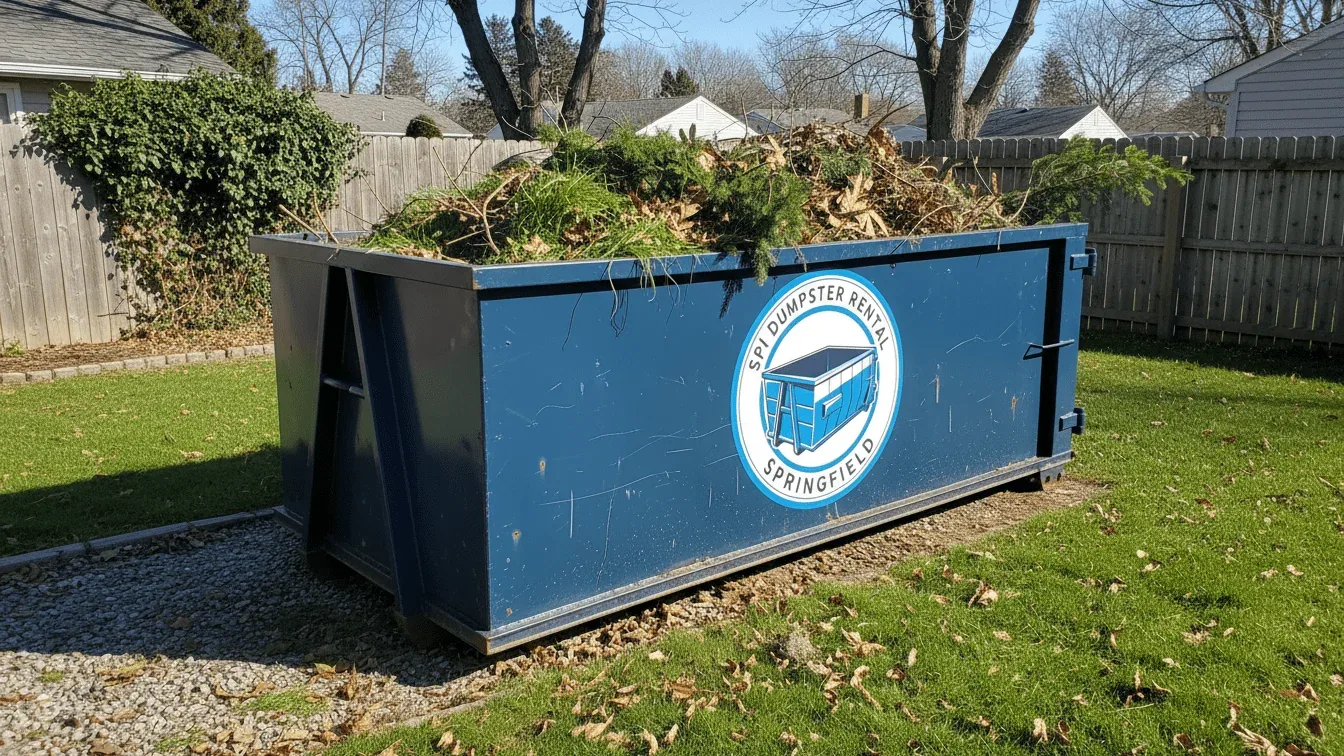
- Downed tree limbs and branches — often the single largest volume item after a wind or tornado event, ranging from small brush to substantial limbs.
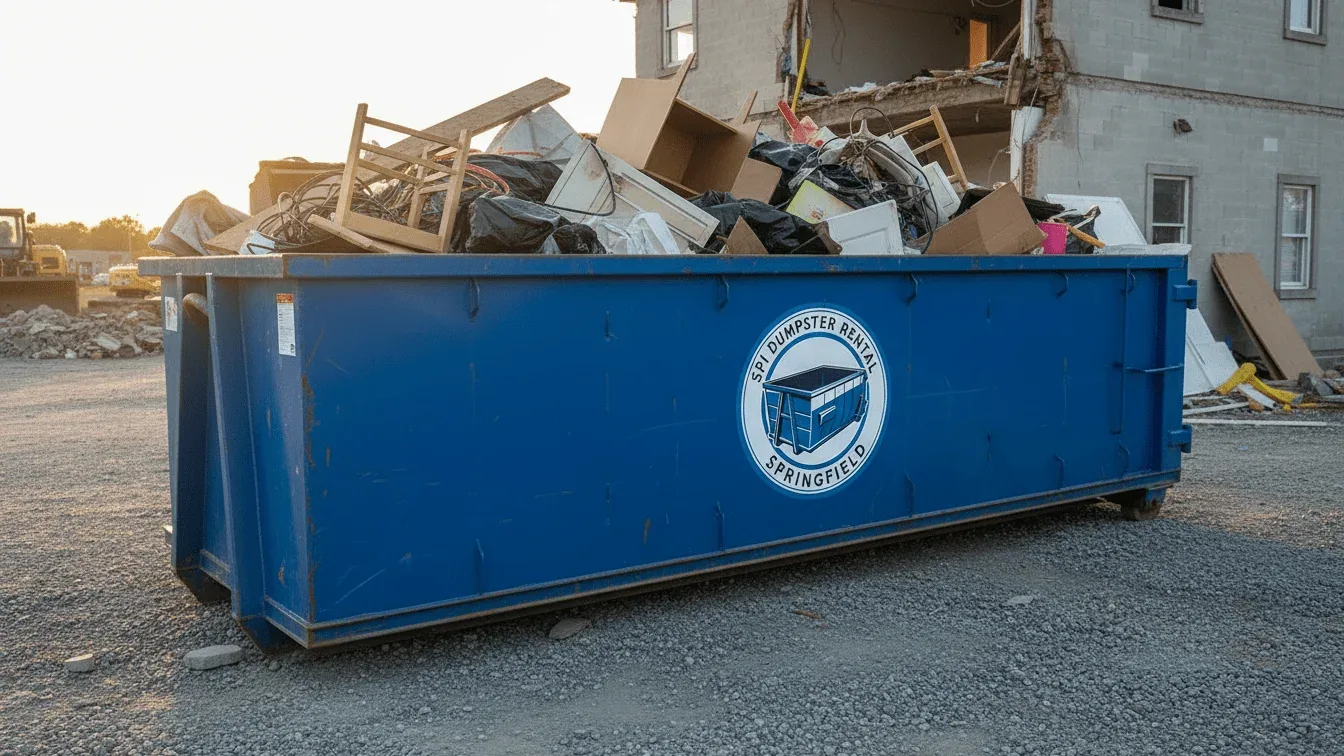
- Damaged roofing material — torn shingles, underlayment, and sometimes decking, especially after hail or straight-line wind damage. This overlaps closely with a standard roofing dumpster rental if a full re-roof follows the storm.
- Water-damaged drywall and flooring — when roof or window damage lets water into the home, soaked drywall, insulation, and flooring often need to come out to prevent mold.
- Fencing — wood and chain-link fence sections are commonly flattened by falling limbs or straight-line winds and need full replacement rather than repair.
- Siding, gutters, and outbuilding debris — sheds, carports, and detached garages can take significant hits and contribute their own share of scrap material.
Heavier structural cleanup, such as a partially collapsed garage or outbuilding that has to come down entirely, moves into demolition debris removal territory rather than a standard storm cleanup. It's worth mentioning during booking so the right size and weight allowance gets set up from the start.
Sizing a Dumpster for Storm Cleanup
Storm debris volume varies a lot by property, so there's no single right answer, but a few general guidelines help narrow it down:
- Smaller yard and limb cleanup with limited roof or structural damage often fits in the 20-yard dumpster, especially on a typical residential lot.
- A significant tree-and-roof event — large limbs down, a full roof section torn off, damaged fencing, and some water-damaged interior material — is where most Sangamon County homeowners land in the 30-yard dumpster range.
- Multiple downed trees, an outbuilding loss, or a combination of roof and interior water damage may call for more than one container, or a larger size, depending on the property.
Tree debris is bulky but relatively light, while roofing material and wet drywall are dense and heavy, so a container that looks full of branches may still have plenty of weight capacity left for shingles or debris. Comparing options on the full dumpster sizes page, or just calling in the details, is the fastest way to land on the right size the first time rather than paying for a second haul.
Why Fast Delivery Matters After a Storm
Storm debris isn't just an eyesore — downed limbs and torn roofing material create tripping and puncture hazards, can block driveways and walkways, and in the case of exposed roof sections, leave a home vulnerable to further water damage if a second round of rain moves through before repairs start. That's why timing matters as much as sizing.
SPI Dumpster Rental Springfield delivers same-day dumpster delivery whenever it's possible to get a container out to a property, which is especially valuable in the days right after a storm when debris is piling up fast and every neighbor on the block may be dealing with the same thing. Getting a container on-site quickly means cleanup can start the same afternoon instead of sitting on a waitlist while limbs and roofing material accumulate in the yard.
Keep Storm Debris Separate From Household Junk
If a claim is involved, it's worth being deliberate about what goes into the storm-debris container versus a separate load of unrelated household junk. Insurers typically only reimburse for debris removal directly tied to the covered storm event — not an unrelated garage cleanout or old furniture that happened to get tossed in at the same time.
- Where practical, load storm-caused debris (limbs, roofing, damaged fencing, water-damaged material) separately from general household items.
- Keep any paperwork, photos, or the dumpster rental invoice itself, since some insurers ask for documentation of debris removal costs as part of the claim.
- If you're unsure whether something qualifies as storm debris, a quick check with your adjuster before it leaves the property is far easier than trying to sort it out after the fact.
This kind of sorting doesn't need to be perfect, but a little organization up front can make the difference between a smooth reimbursement and a denied line item.
Getting Started
Storm cleanup across Springfield, Chatham, Rochester, Sherman, Riverton, Auburn, and the rest of Sangamon County follows the same basic pattern every season: confirm it's safe, document the damage, then get debris off the property before it becomes a bigger hazard. SPI Dumpster Rental Springfield has handled storm-debris cleanups across all 16 communities in the service area since 2016 and can walk through sizing and same-day availability over the phone. Call (217) 993-8727 to get a container scheduled.