New-home construction has stayed active across the Springfield area in recent years, and builders working in Chatham and the surrounding Sangamon County market are seeing steady lot activity alongside the rest of Springfield's growth corridor. Sherman, just north of the city, has been planning for continued growth as well, which means more foundations poured, more framing crews on site, and more builders trying to keep a job running without a debris pile slowing down the schedule. If you're building anywhere from Springfield proper out to Rochester, Riverton, or Auburn, getting the dumpster plan right up front saves real money and real headaches over the life of the build.
This guide covers sizing and scheduling construction dumpster rental across a typical build timeline, plus two Illinois-specific rules every new-construction builder should already know: the JULIE/811 call-before-you-dig requirement and the Illinois EPA's distinction between clean and general construction/demolition debris.
Why New Construction Debris Doesn't Behave Like Remodel Debris
A kitchen remodel or a roof tear-off produces one fairly predictable load of debris. New construction is different — it's a rolling series of distinct waste streams spread across weeks or months, and each phase generates a different volume and material mix. A dumpster sized right for foundation work is undersized for framing debris, and a container that made sense during framing is overkill for final cleanup. Planning size and swap timing around the build schedule, rather than ordering one container and hoping it lasts, is what actually keeps a job site moving.
Sizing by Build Phase
Most residential and light-commercial new-construction jobs in the Springfield area move through four debris-generating phases:
- Site prep and foundation: Excavation spoil, form lumber, broken concrete, and packaging waste from footings and foundation walls. A 20-yard dumpster usually covers this phase on a standard lot, though heavy concrete rework may push toward a 30-yard.
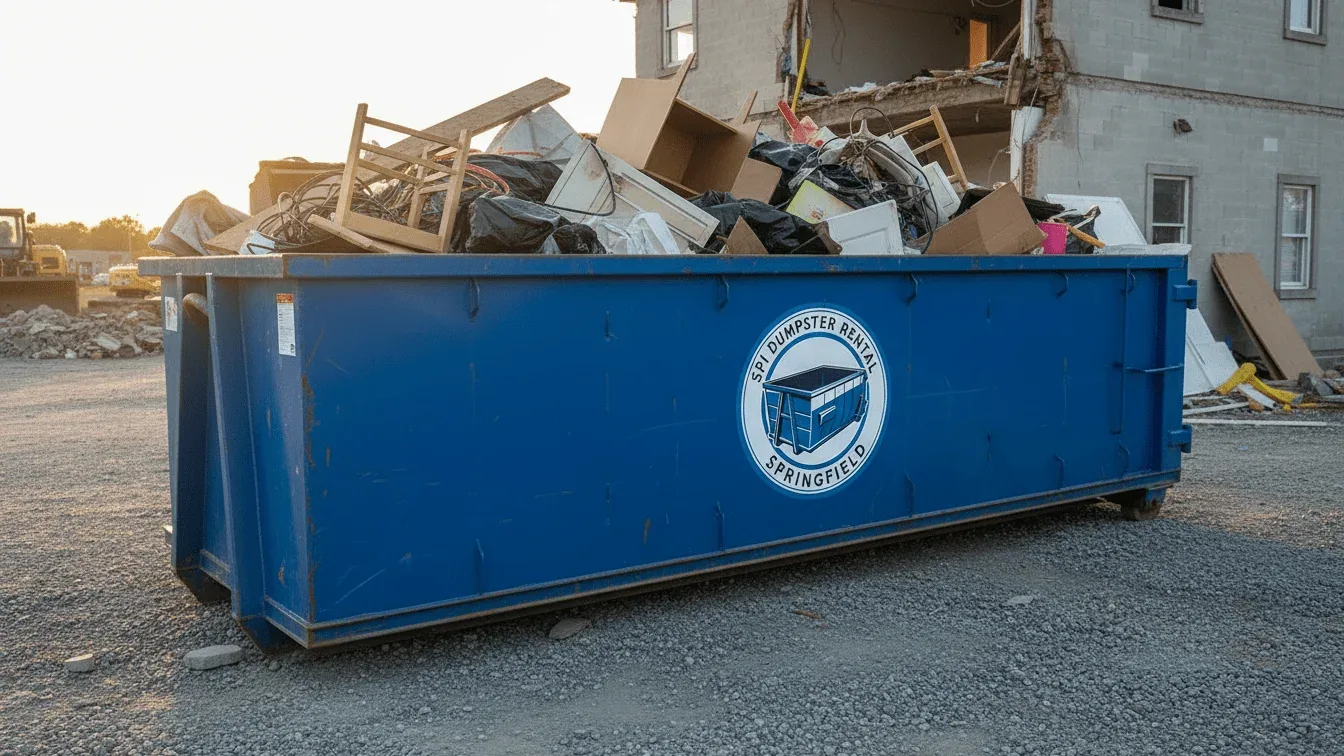
- Framing: The highest-volume phase for bulky, low-density waste — cut-offs, sheathing scraps, packaging, and pallet material. A 30-yard or 40-yard dumpster handles a full framing package on most builds; larger homes or fast crews often want the 40-yard so the container isn't topping off mid-week.
- Drywall, trim, and finish: Denser but lower-volume debris — drywall scrap, trim off-cuts, underlayment, fixture and cabinetry packaging. A 20-yard container generally covers this phase; watch weight here more than volume, since drywall reaches tonnage limits faster than bulky framing scrap.
- Final cleanup and punch list: Mixed light debris — leftover packaging, minor offcuts, landscaping waste, general site cleanup ahead of the walkthrough. A 20-yard dumpster is typically all that's needed to close out the site.
Heavier, denser material — broken concrete, brick, block, or masonry from a foundation redo or driveway tear-out — is worth a separate conversation before you order. Concrete hits weight limits long before a container looks full, so those loads are often better handled through concrete and heavy debris service rather than mixed into a general framing dumpster.
Scheduling Swap-Outs Across the Build
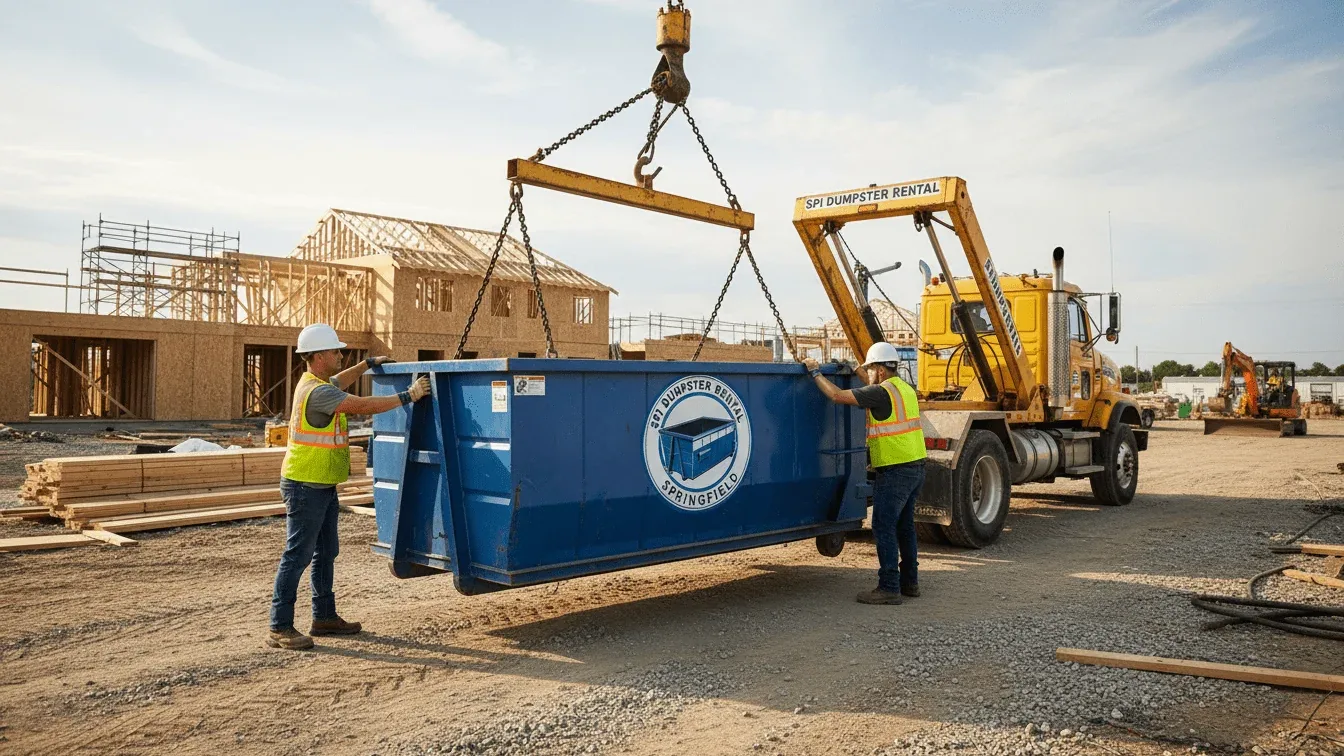
The mistake we see most often isn't the wrong size — it's the wrong schedule. Ordering one large container at the start and expecting it to last through framing and finish usually means either it sits mostly empty for weeks (paying rental days for nothing) or it fills early and stalls the crew waiting on a swap. A better approach is to plan swap-outs around trade milestones from the start:
- Line up delivery with your excavation or foundation start date, not your permit date, so you're not paying for idle days before there's debris to fill it.
- Schedule the framing-phase swap right after the frame is closed in, when scrap volume peaks and before trim and mechanical crews start layering in their own debris.
- Plan a mid-finish swap or pickup around drywall completion — usually the heaviest single load of the finish phase.
- Hold the container, or schedule a small final one, through the punch list so subs aren't hauling debris off-site in truck beds during the last two weeks.
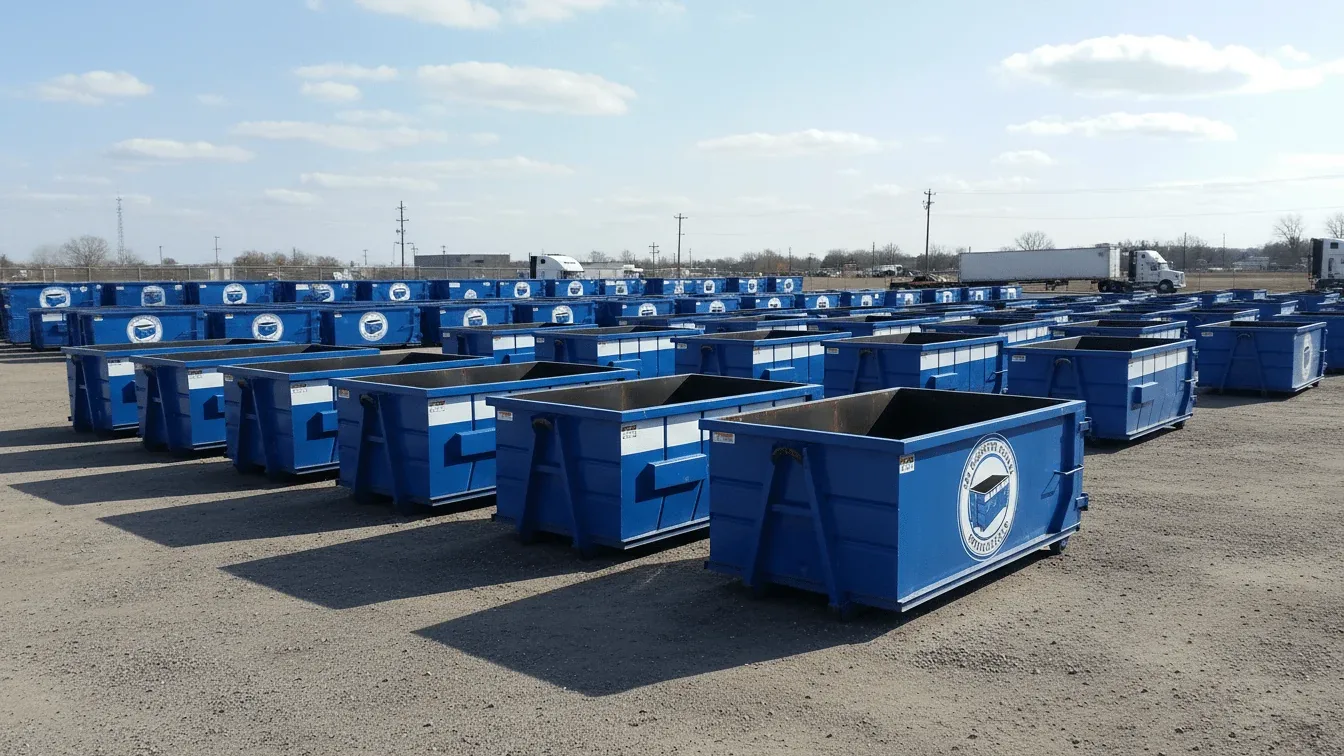
For builders running multiple lots at once — increasingly common with the pace of activity around Chatham and the broader Springfield growth corridor — coordinating a standing swap schedule across several active addresses is usually simpler than calling in each order individually. Our commercial dumpster rental service is built for that kind of recurring, multi-container scheduling.
Call JULIE/811 Before Anything Breaks Ground
Before excavation starts — and before a dumpster or heavy equipment gets staged anywhere near where trenching or grading will happen — Illinois law requires a call to JULIE (Joint Utility Locating Information for Excavators), the state's 811 utility-notification service. JULIE marks underground gas, electric, water, and communication lines so crews can dig without striking a buried utility. This applies to new-construction site work throughout Sangamon County the same as anywhere else in the state, and it should happen well before your foundation contractor's first day on site. Request details and lead times are at illinois1call.com.
It's also worth thinking about dumpster placement in this context — a container staged over or near a marked utility line, even a shallow one, can complicate both the locate and the eventual excavation. Confirming your dumpster's pad location against the JULIE markings before delivery avoids relocating a full container mid-job.
Clean Debris vs. General C&D Debris: A Distinction Worth Knowing
One regulatory nuance that catches builders off guard: not all construction and demolition debris is treated the same under Illinois rules. The Illinois EPA draws a real distinction between Clean Construction or Demolition Debris (CCDD) — uncontaminated concrete, brick, block, and soil generated from construction, remodeling, or demolition, with no other waste mixed in — and general C&D debris, the broader mixed category most job-site dumpsters actually carry: wood, drywall, packaging, insulation, roofing scrap, and similar materials.
CCDD follows its own handling pathway under Illinois EPA rules, separate from general mixed-debris disposal, because uncontaminated concrete and soil can often be managed or reused differently than mixed C&D waste. The practical takeaway: if a phase of your build generates a genuinely clean, single-material load — say, broken concrete from footings with no wood, wire, or insulation mixed in — flag it separately rather than tossing it into the same container as general framing scrap, since clean and mixed loads are handled differently on the back end. The Illinois EPA's CCDD program page covers what qualifies and how it's regulated: epa.illinois.gov/topics/waste-management/waste-disposal/ccdd.html. When you're not sure whether a load counts as clean or general debris, ask before it goes in the container.
For full teardown-and-rebuild lots, where an existing structure comes down before the new build goes up, the debris stream at the start of the job looks different from anything downstream — see our demolition debris removal page for how that phase is typically handled separately from new-build framing waste.
Putting It Together: A Simple Phase Plan
For a standard single-family new build in Springfield or the surrounding towns, a workable default plan looks like: a 20-yard container for site prep and foundation, a swap to a 30- or 40-yard for framing, a swap back down to a 20-yard for drywall and finish, and either a hold or a final small pickup for punch-list cleanup. Larger builds, multi-lot projects, or unusual site access may shift those numbers, which is why a quick call before ordering beats guessing off a general size chart. Our full dumpster size guide has dimensional and weight-limit detail on every container size.
Every new-construction job runs a little differently, and the right dumpster plan depends on your lot, your build timeline, and how many trades are on site at once. Call SPI Dumpster Rental Springfield at (217) 993-8727 and we'll help you map out sizing and swap timing for your build, whether that's a single lot in Chatham or a multi-home project spread across Sangamon County.