Storm & Tornado Debris Cleanup Guide | Springfield IL
A practical, safety-first guide for Springfield and Sangamon County homeowners on cleaning up tree limbs, roofing, and water damage after severe storms and tornadoes.
ReadPermits & Regulations guide
We can't cite a specific permit rule for every town we serve, so we won't pretend to — here's exactly what we know for certain, and what you should call ahead and ask, town by town across Sangamon County.
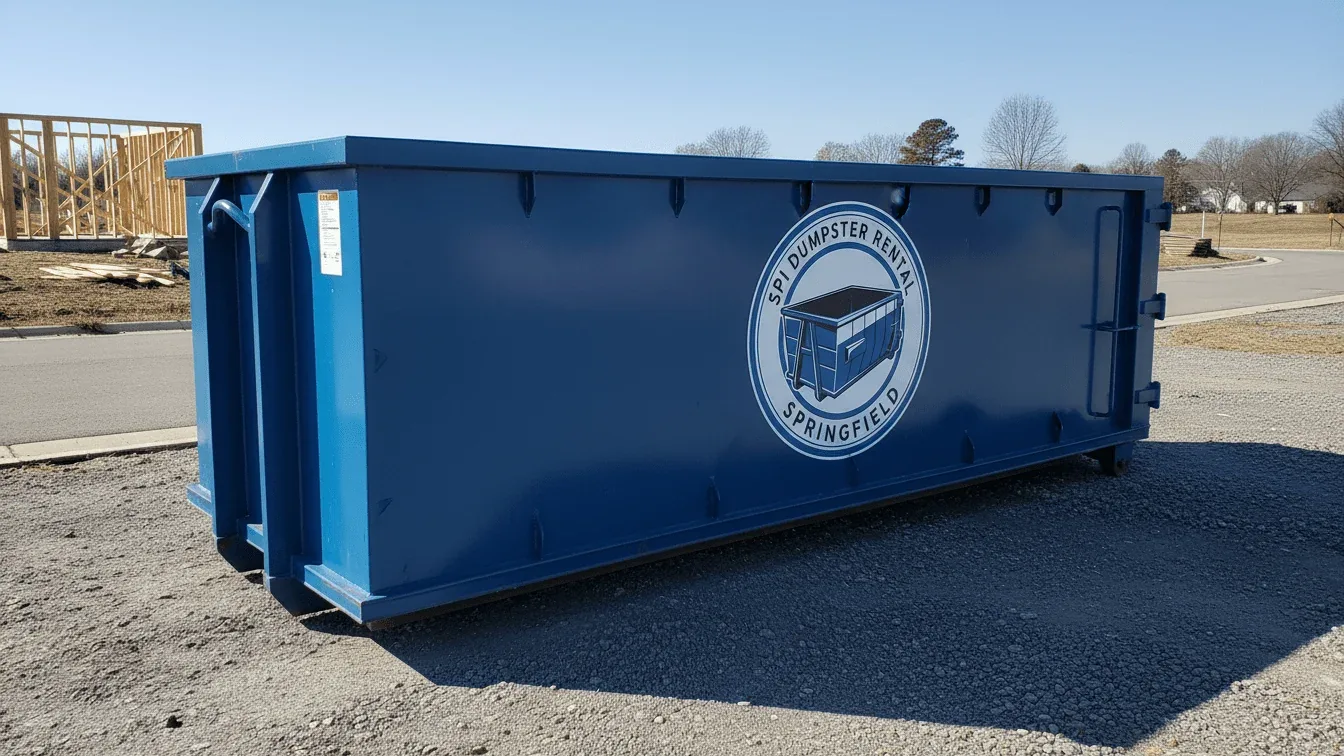
Every week, someone calls our yard at 1250 Taylor St and asks the same question in a dozen different ways: "Do I need a permit for this?" The honest answer depends on exactly one thing more than any other — where the dumpster sits, not what town it sits in. If the container stays on your driveway, in your yard, or anywhere else on your own property, you are essentially never going to need a permit, in any of the 16 communities we serve. If it has to go in the street, on the shoulder, or anywhere in the public right-of-way, you should assume a permit or at least a phone call to the local government is required, and the specifics of that process vary town by town.
We built this guide because we would rather tell you what we actually know than guess and let you find out the hard way, with a ticket or a tow. Below, we lay out what we can confirm for Springfield itself, and then we are just as direct about the other 15 towns we serve: for those communities, we have not been able to independently verify a published, town-specific dumpster placement ordinance, and we are not going to pretend otherwise. In every case, the safe move is the same — call ahead before you plan a street placement.
Springfield is our home base, so it is also the one place on this list where we have a real answer for you. Right-of-way matters in the city — anything involving the street, curb, or public easement in front of a property — fall under the City of Springfield Public Works Department. If your project has room for the dumpster to sit entirely on your driveway or elsewhere on private property, our experience delivering roll-off containers across Springfield for years is that this is routine and does not trigger a permit requirement. The moment a container needs to sit in the street, on a curb lane, or anywhere the city considers right-of-way, Public Works is the office to call before we drop the box, not after. We are glad to help coordinate placement logistics on our end, but the permit itself — if one applies to your specific block, project, and duration — is issued by the city, not by us, and we are not going to guess at fees or timelines on their behalf. Call them directly and get the answer in writing if the job is going to sit on the street for more than a day or two.
Southern View, Jerome, Leland Grove, and Grandview are small, largely residential communities tucked in and around Springfield's edges, and each one has its own village or city government separate from Springfield's. That matters here: Springfield's Public Works right-of-way rules do not automatically apply once you cross into one of these municipalities, even if the street looks and feels the same. We have delivered plenty of dumpsters to driveways in all four of these towns without any permit issue, because private-property placement is the low-friction option everywhere. What we do not have is a verified, published ordinance from any of these four villages spelling out street-placement permit fees or application steps. If your project in Southern View, Jerome, Leland Grove, or Grandview needs the container anywhere near the curb or street, the right move is a quick call to that village's clerk or public works contact before we schedule delivery. It takes a few minutes and it is the only way to know for certain what that specific town requires.
The rest of our Sangamon County service area is made up of smaller cities and villages spread around Springfield: Chatham, Rochester, Sherman, Riverton, Williamsville, New Berlin, Pleasant Plains, Auburn, Divernon, Mechanicsburg, and Pawnee. We treat all eleven the same way in this guide, and we want to be upfront about why: we have not found a specific, published dumpster-permit ordinance we could independently verify for any of them.
That is not a knock on these towns — plenty of small municipalities handle right-of-way requests informally, through a call to the village clerk or the public works crew, rather than through a formal published ordinance you can look up online. It just means we cannot cite a rule, a fee, or a process for you here, and we are not going to invent one. What we can tell you, because it holds true everywhere we deliver, is this: keeping the container on a driveway or other private property is almost always the simplest path and rarely raises any permit question at all. If a job in Chatham, Rochester, Sherman, Riverton, Williamsville, New Berlin, Pleasant Plains, Auburn, Divernon, Mechanicsburg, or Pawnee needs the dumpster in the street or on the shoulder, even briefly, call that town's village or city hall first. A five-minute conversation with the clerk's office is worth far more than a guess, and it is the only way to know what that particular town actually expects.
Sangamon County itself maintains county roads outside these municipal boundaries, and county-level questions can be directed to the Sangamon County government site, though for the vast majority of our residential and commercial jobs, the relevant authority is the town, not the county. It is also worth separating permit questions from waste questions: what you are allowed to put in the dumpster is a completely different topic from where the dumpster is allowed to sit. If your project involves construction or demolition debris, the Illinois EPA's rules on clean construction and demolition debris are worth a look, separate from any local placement permit.
One more practical note: HOA rules are a separate layer from municipal permits. Some neighborhoods in Chatham, Springfield, and elsewhere in the county have their own guidelines about dumpsters sitting in driveways or visible from the street, even when the town itself has no objection. That is between you and your HOA, but it is worth a quick check before delivery day if you belong to one.
Our part in all of this is straightforward: we deliver on time, we place the container where you tell us, and if you are not sure whether your placement needs a permit, we would rather you find out from the town itself than from us guessing. Call us at (217) 993-8727 to talk through your project, your timeline, and where the dumpster needs to sit — we can tell you what we know from experience delivering across all 16 of these communities, and we will tell you plainly when the permit question is one only your town's office can answer.
Talk to a real person
Call (217) 993-8727 and describe the job. Flat price, stated tonnage allowance, and a delivery window on the same call.
Mon–Sat 7:00am – 6:00pm · Sun by appointment
From this guide
In all 16 towns we serve, keeping the dumpster entirely on private property, such as a driveway, almost never requires a permit. Permit questions come up when a container needs to sit in the street or public right-of-way instead.
The City of Springfield's Public Works Department handles right-of-way matters, including dumpsters placed in the street or curb lane. Contact them before planning a street placement so you know what applies to your specific block and project.
We have not found a published, specific dumpster-permit ordinance we could independently verify for Chatham, Rochester, Sherman, Riverton, Williamsville, New Berlin, Pleasant Plains, Auburn, Divernon, Mechanicsburg, or Pawnee, or for Southern View, Jerome, Leland Grove, and Grandview. If your project needs street placement in any of these towns, call that town's village or city hall or clerk's office ahead of time to ask directly.
We do not pull street-placement permits on your behalf. We can help you plan logistics and answer questions from our delivery experience, but permits are issued by each town's own office, and we encourage customers to confirm requirements directly with that office.
No. A placement permit is about where the dumpster physically sits, such as a driveway versus a street. Waste rules, like the Illinois EPA's construction and demolition debris guidelines, are a separate matter covering what can go inside the container.
Keep reading
A practical, safety-first guide for Springfield and Sangamon County homeowners on cleaning up tree limbs, roofing, and water damage after severe storms and tornadoes.
ReadA phase-by-phase guide to renting dumpsters for new-construction builds in Springfield and Sangamon County, covering sizing, swap-out scheduling, JULIE/811, and Illinois EPA's clean-vs-general C&D debris rules.
ReadMany of the older homes near Springfield's historic core were built well before modern asbestos regulation. Before you swing a hammer, here's what to know about testing, abatement, and why suspected asbestos material can never go in a standard rental dumpster.
Read