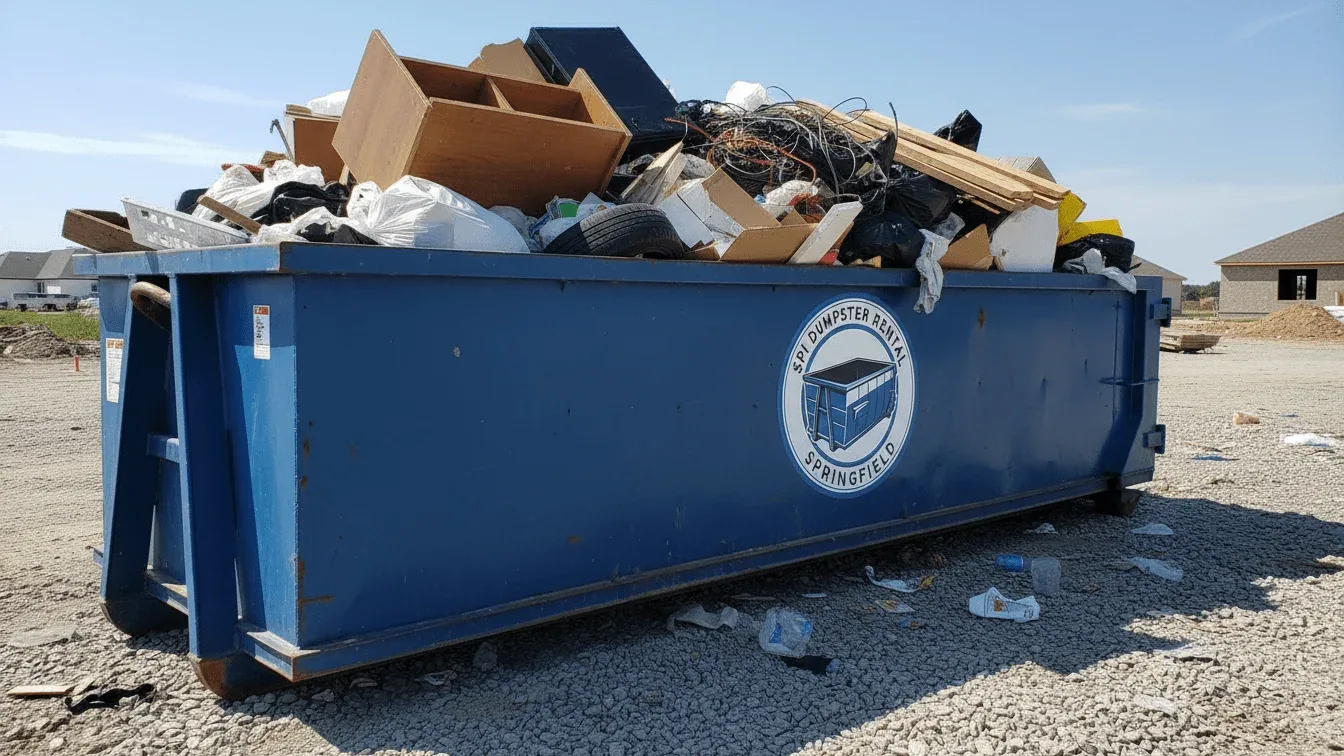
Anyone who has torn out a kitchen or gutted a bathroom in Springfield knows the debris pile grows faster than expected. Between old cabinetry, broken tile, flooring scraps, and drywall dust, a mid-size renovation can generate several tons of material before the first coat of primer goes on. Renting the right dumpster for the job — and understanding what your project will actually produce — saves you from mid-project headaches, overflowing containers, and unnecessary trips to the transfer station.
This guide breaks down what to expect from common renovation projects around Sangamon County, how to size a container for the scope of work, and a few local realities worth planning around before demolition starts.
What Different Renovation Projects Actually Produce
Debris volume and weight vary a lot depending on what's being torn out. A little planning here goes a long way toward picking the right container the first time.
- Flooring tear-out: Hardwood, tile, vinyl, and old carpet with padding are all heavier than they look. Tile and hardwood especially can fill a dumpster's weight limit before it looks even half full, so a smaller, denser load often calls for a container sized more for weight than volume.
- Cabinetry and countertops: Bulky but relatively light unless you're pulling out stone or solid-surface counters, which add weight fast. Cabinets take up space awkwardly, so plan for more volume than the material's actual weight suggests.
- Drywall and plaster: Drywall is moderately heavy and generates a lot of dust; plaster and lath (common in older Springfield homes) is significantly heavier per square foot and breaks into dense, jagged chunks.
- Tile and tub demo: Ceramic tile, tile backer board, and cast-iron or steel tubs are dense. A single old cast-iron tub can eat up a meaningful chunk of a container's weight allowance on its own.
For most single-room remodels, this material mix is manageable in a 15-yard dumpster. For projects involving multiple rooms, structural changes, or a full gut-out, sizing up to a 20-yard dumpster gives you more breathing room. If you're not sure where your project lands, our dumpster size guide walks through the differences in more detail.
Sizing by Project Scope
As a general rule of thumb for Springfield-area renovations:
- Single-room refresh (bathroom remodel, one bedroom's flooring, a small kitchen update): a 15-yard dumpster typically handles the tear-out debris comfortably.
- Kitchen remodel with cabinetry, flooring, and drywall: many homeowners step up to a 20-yard dumpster, especially if countertops or old appliances are part of the pull.
- Whole-house or multi-room gut-out: larger projects often need either a 20-yard container with a planned swap, or multiple hauls over the course of the job. This is also where demolition debris removal service becomes worth a conversation, particularly if walls, flooring substrate, and fixtures are all coming out at once.
If your remodel includes tearing out a concrete slab, an old patio, or a driveway apron as part of the project footprint, that material needs to be handled separately — concrete is too heavy and too dense to mix with general renovation debris in most containers. Our concrete and heavy debris service covers that kind of load specifically.
Older Homes vs. Newer Construction: Why Debris Differs
Springfield's housing stock spans a wide range of ages, and that matters when you're estimating what's coming out of the walls. Homes near the historic core and older neighborhoods were often built with materials and methods that predate today's standards — plaster and wood lath instead of drywall, older wiring and galvanized plumbing, and construction techniques that simply produce a different kind of debris than a home built in the last couple of decades.
By contrast, newer construction in outlying communities like Chatham tends to generate more drywall, engineered wood products, and modern composite materials — lighter overall, but often bulkier by volume.
One practical note for anyone working on a pre-1978 home: paint applied before that year may contain lead. The EPA's Renovation, Repair and Painting (RRP) rule sets out specific practices contractors follow when sanding, scraping, or otherwise disturbing painted surfaces in older homes. It's not something to be alarmed about, but it is worth knowing before you start prepping walls or trim for demo — a quick conversation with your contractor about the home's age and paint history is a reasonable first step.
Staging a Container for a Multi-Week Renovation
Not every project wraps up in a weekend, and your dumpster rental doesn't have to either. Rental durations are flexible enough to match a realistic renovation timeline rather than forcing you to rush demo and disposal into a couple of days.
For longer jobs, two approaches tend to work well:
- One container, parked for the duration: Good for projects where debris trickles in over several weeks rather than arriving all at once.
- Swap-out service: If a container fills up before the project is finished — common on kitchen and whole-house jobs — we can pick up the full dumpster and drop an empty one in its place, so work doesn't stall waiting on disposal.
Either way, it helps to walk through your project timeline when booking so the container size and rental window actually match the scope of work, rather than guessing and having to adjust mid-project.
What Not to Put in the Dumpster
General renovation debris — wood, drywall, flooring, cabinetry, tile, plaster, metal fixtures — is exactly what these containers are built for. A few categories are off-limits, though:
- Paints, solvents, adhesives, and other liquid or flammable hazardous materials
- Fuel, propane tanks, and other pressurized containers
- Any material with confirmed asbestos content (common in some older flooring, insulation, and pipe wrap) — this requires specialized handling and disposal, separate from a standard renovation dumpster
- Debris with unaddressed lead paint dust or chips from remediation work — this should be contained and disposed of according to RRP guidelines, not mixed into general debris
If your project's scope has turned up suspected asbestos or you're dealing with lead paint remediation specifically, that's a separate conversation from a standard renovation haul — give us a call and we can point you toward the right next step.
Booking for Your Springfield-Area Renovation
Whether you're updating a single bathroom in Leland Grove or gutting a kitchen in Rochester, matching the container to the actual scope of work is what keeps a renovation project moving instead of stalling out over a full dumpster or an underestimated load. Our team works with homeowners across Springfield, Chatham, Sherman, Auburn, and the rest of Sangamon County every week and can help you land on the right size and timeline before the first wall comes down.
Call SPI Dumpster Rental Springfield at (217) 993-8727 to talk through your project, or browse our residential dumpster rental options to get started.